Thursday, 21 August 2008

Bolivia Election: Post-Mortem

It's been almost two weeks since the recall referendum took place in Bolivia. I have been wanting to comment on it for a while now, but a mixture of being stuck with my dissertation, transfixed to the TV watching the Olympics, working 9-5 as in intern with Latinnews.com, and last but not least, without Internet connection has meant that I've been somewhat incapable of posting anything of relevance of late.

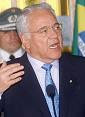
So anyway it was meant to be ‘make or break’ time for President Evo Morales. I for one harboured doubts as to whether he would be able to win over the electorate given that Bolivia seems to be on the brink of internal collapse.
Opposition leaders in Santa Cruz et.el (or the "Media Luna" as the best known by) have been relentless in their critique of Evo Morales, and the international media has been quick to catch onto images of protests, blockades and violent skirmishes.
However, the fact that Morales won a resounding 67% of the vote and even encroaching upon the popularity of the “Media Luna” regional leaders (whose leadership was also up for re-election), shows that underneath the surface, the Bolivian majority still believe in giving Morales and his indigenous/socialist/resource-nationalist experiment a chance.

Anyway for a far better analysis of where the recall referendum leaves Bolivia, there is no one better than Jim Shultz (head of the NGO 'The Democracy Centre') and his “Blog from Bolivia” and his post, "Bolivia Election: Post Mortem"

Tuesday, 19 August 2008

Violent Outbreaks in Santa Cruz

The Bolivian government seeks to charge opposition prefect Ruben Costas for stirring up violence over the weekend in Santa Cruz as rifts between the government and the “media luna” department heighten.

Santa Cruz’s chief of police, Wilge Obleas, has been forced to stand down on medical grounds, after having suffered injuries in the violent attacks that marred Santa Cruz this weekend. In the wake of the police forcefully removing protestors from a YPFB installation, disturbances broke out between the police force and radical autonomists, including the Unión Juvenil Cruceñista (UJC), resulting in more than 20 people being wounded. The government has since accused Rúben Costas and president of the civic committee Branco Marincovik for the subsequent attacks on the police headquarters in Santa Cruz, in what it sees as calculated attempt to provoke increasing levels of violence in the opposition-led department and undermine the national police force. Santa Cruz prefect Rubén Costas, however, lays the blame at the government’s feet and is now demanding that any future police chief be accountable to him and not the national governemt. Nevertheless, it remains to be seen how any judicial proceedings will brought against the Costas and Marincovik given the legal vacuum at the top of Bolivia’s judiciary due to vacancies in key judicial institutions, or whether this is an conscious attempt by the government to isolate Rúben Costas after “media luna’s” disappointing results in the recall referendum.

In the aftermath of last week’s recall referendum, which resulted in Evo Morles having secured more than 67% of the vote, there has been a move by the Bolivian government to increase the dialogue with the “media luna” departments. The fact that Evo Morales was able to increase his vote in all four of the opposition-held departments, with a majority of Bolivians supporting him in previously hostile departments of Tarija and Pando, has weakened the mandate of the “media luna” in their bid for increased autonomy.

The rift between the central government and the “media luna” is set to deepen with opposition leaders in the 5 departments planning general strikes for next Tuesday. The regional opposition leaders are demanding that the government retract the move to redirect the IDH revenues that previously went to the regions themselves. The government uses this additional tax revenue to fund a nation-wide pension plan. The gas rich department, on the hand, believe that the loss of revenue will limit their ability to carry out important regional projects.

Monday, 4 August 2008

History Repeating Itself?

Here are a few exercts from an article I found in the International Herald Tribune. Of course there is nothing to worry about, but isn't this all so reminsicent of the early 1960s and the run-up to the Cuban Missile Crisis? http://www.iht.com/articles/2008/08/04/europe/cuba.php

Prime Minister Vladimir Putin is calling for Russia to regain its influence with Cuba, a former Cold War ally of the Soviet Union, Russian news reports said Monday.

The statement was made amid persistent speculation about whether Russia was seeking a military presence in a country just 150 kilometers, or 90 miles, from the United States in response to U.S. plans to place parts of a missile defense system in Poland and the Czech Republic. It is not a secret that the West is creating a 'buffer zone' around Russia, involving countries in central Europe, the Caucasus, the Baltic states and Ukraine," the agency quoted Leonid Ivashov, the head of the Academy of Geopolitical Problems, as saying. "In response, we may expand our military presence abroad, including in Cuba."Russia opposes U.S. plans to put missile-defense elements in eastern Europe, saying the facilities are aimed at undermining Russia's missile potential. Russia has threatened an unspecified "military technical" response if the plans go through.

Last month, the Defense Ministry denied a major Russian newspaper's report that the country was considering placing nuclear-capable bombers in Cuba - a move that would have echoed the 1962 Cuban Missile Crisis.

Tuesday, 22 July 2008

Argentina's National Airline Renationalised

Any general overview of Latin American economic history will show you how attitudes for or against nationalisations and privatisations swing back and forth over time with a pendulum-like consistency.

The 1980s and 1990s saw the pendulum of state vs. private debate swing back in favour of privatisation after the presumed overreach, corruption and mismanagement of the state-owned enterprises of the mid-20th century. SOEs were meant to have fuelled economic development in many a Latin American country. Unsurprisingly, perhaps, it wasn’t long before the pendulum swung back the other way and privatisation became a word that any politician sought to distance themselves from as far as humanly possible. Of course this didn't always stop them from implementing privatisation. In Bolivia during the 1990s, President Gonzalo Sánchez de Lozada was somehow able to hood-wink the Bolivian people into believing that when he was selling off the rights of the country’s natural resources to foreign multinationals, it wasn’t so much 'privatisation' but rather 'capitalisation'. Yes, there is a difference, but it’s a slight one at best. And it ultimately left the Bolivian government unable to benefit from the huge windfalls that were soon to be made from Bolivia's recently discovered huge natural gas reserves. But more on that in my dissertation paper...

Anyway what drew my attention today through my daily trawl through the BBC website was the news that the Argentine government is to renationalise its floundering airline, Aerolineas Argentinas - Argentine Airline Set For Bumpy Ride. The national airline was one of many companies to been sold off rapidly when Carlos Menem was Argentine President back in the 1990s. Now with the left-of-centre and so-called ‘back-to-the-roots populist Peronism’ of the Kirchner's in hold of the Casa Rosada (Buenos Aires's answer to the White House) a number of the sectors once privatised by Menem have been renationalised.
It seems pretty obvious that it’s going to be hard, if not impossible to bring Aerolineas Argentinas back into profit. Then this nationalisation isn’t just about making a profit. Okay there is the nationalistic sentiment – something Argentines have in bucket loads - that goes hand-in-hand with having a national airline. And with a majority of Argentines actually favouring the government taking control of the airline, it would make political sense for under-pressure President Cristina Kirchner to do something that for once wouldn’t have half the nation up in arms. However I think in a country like Argentina, a country that is so immense in its geographic dimensions, with numerous far-away provinces that depend upon a direct link to the capital, needs a national airline. An airline that is more concerned with servicing these far-away communities than with make a profit at the end of the year.

Monday, 21 July 2008

Bolivia in the National Geographic

Whilst Bolivian politics takes yet another ugly turn - Evo Morales in a recall referendum and further clamouring from the Eastern provinces - photos from a recent National Geographic article reminds us of the natural wonders that have been endowed upon this troubles Andean nation. For some truly great photos from Bolivia's vast Altiplano region check out this interactive map "Photography Map: Altiplano"

Of course the articles that go along with dazzling photos (Bolivia's New Order & Riding with Evo) try hard to give an accessible account of the rise of Bolivia's new order,"the ascent to power of a new elite of militant indigenous people." And along the way you do get the feeling that they've been carried away slightly by this over-romanticised indigenous uprising and fail to question the viability of the country's current direction. But hey it's the National Geographic for goodness sake, not The Economist. So hats off for them for that, and besides who honestly can't get slightly carried away by this astonishing rise from rural serfdom to the Presidential Palace, which the indigenous people have undertaken in recent decades...I was.


Tuesday, 15 July 2008

“¡El Gas Nos Pertenece Por Derecho!”: The Nationalisation Of Bolivian Gas As A Viable Means To Development?

Given that I’ll be spending the next 2 months of my life frantically putting together my Master’s dissertation I guess I will be giving the general Latin American news stuff a bit of a rest. However, I do still intend to keep posting, though I’m afraid that you’ll have to make do with all things Bolivian, especially if they relate to Evo Morales’ attempts at renationalizing the hydrocarbon sector.